





-
 HVAC Maintenance
-
 0 Comments
DIY AC Tune-Up: 5 Easy Steps to Enhance Your Cooling Efficiency
Why Regular Air Conditioner Maintenance Protects Your Investment
Your air conditioning system works harder in Houston than almost anywhere else in the country. With cooling demands extending from April through October and temperatures regularly climbing above 95 degrees, your unit cycles constantly to maintain indoor comfort. This relentless workload creates wear that reduces efficiency, increases energy consumption, and shortens equipment lifespan.
A properly maintained cooling system delivers consistent temperature control while consuming 15 to 20 percent less energy than a neglected unit. This translates directly to lower monthly utility bills during our extended cooling season. Beyond cost savings, routine maintenance prevents the inconvenient breakdowns that always seem to happen during the hottest weeks of summer when HVAC technicians are scheduling days out.
The seven steps outlined in this guide focus on accessible tasks you can perform with basic household tools and minimal technical knowledge. These preventive measures complement professional maintenance services by addressing the routine upkeep that keeps your system running between annual inspections. You will improve airflow, reduce strain on mechanical components, and identify potential issues before they escalate into costly repairs.
Most homeowners can complete this entire tune-up process in two to three hours. The time investment pays immediate dividends in comfort and efficiency, particularly important given Houston’s high humidity levels that force air conditioners to work double duty removing moisture while cooling. When you maintain your system consistently, you extend its operational life by years and avoid the expense of premature replacement.
Clean and Replace Your Air Filter for Immediate Performance Gains
Begin with the single most impactful maintenance task: addressing your air filter. Locate the filter access panel on your indoor air handler or return air vent. Remove the existing filter and examine it in good light. If you cannot see light passing through the media, or if visible dust and debris coat the surface, replacement is necessary.
Houston’s high pollen counts during spring and elevated dust levels throughout the year mean filters accumulate particulates faster than in drier climates. Replace standard disposable filters every 30 to 45 days during peak cooling months. If you have pets, smoke indoors, or run your system constantly, increase this frequency to every three weeks. Washable filters require monthly cleaning with a garden hose and must dry completely before reinstallation.
When selecting replacement filters, match the size exactly to your current filter dimensions. Choose filters with a MERV rating between 8 and 11 for optimal balance between filtration efficiency and airflow. Higher ratings may restrict airflow in systems not designed for them, forcing your blower motor to work harder and consuming more energy.
Next, inspect all accessible ductwork connections for gaps, loose joints, or visible air leaks. Feel around connection points while your system runs; escaping air indicates leaks that waste cooled air into unconditioned spaces like attics. Seal small gaps with metallic foil tape (not cloth duct tape, which deteriorates). This simple step can recover 10 to 15 percent of lost cooling capacity.
Finally, clear the area around all interior vents and returns. Remove furniture, curtains, and storage items blocking airflow by at least two feet. Restricted returns force your system to struggle for adequate airflow, reducing efficiency and causing uneven cooling throughout your home. Walk through each room to verify nothing obstructs air circulation.
Service Your Outdoor Unit and Optimize Thermostat Settings
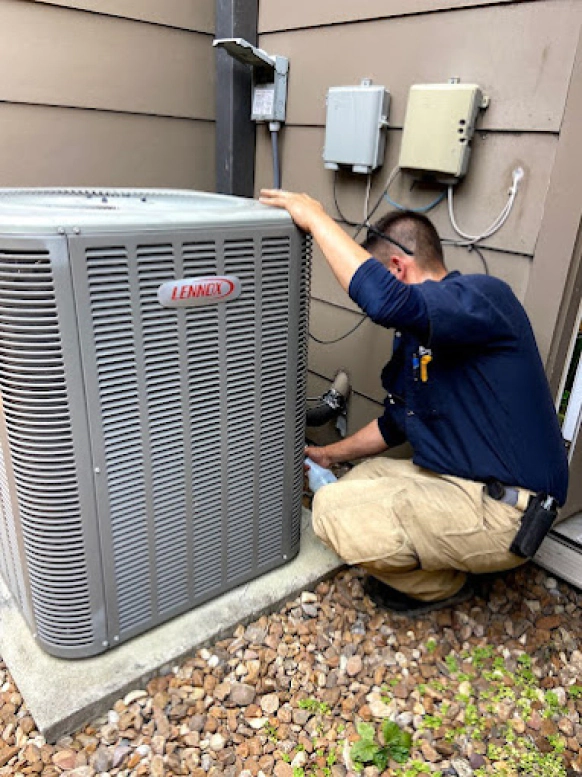
Turn off power to your outdoor condensing unit at the disconnect box mounted near the unit. Remove the top grille or access panel to expose the fan blade. Use a soft brush or vacuum with a brush attachment to remove leaves, grass clippings, spider webs, and accumulated debris from the interior. Houston’s frequent afternoon storms and live oak trees contribute to faster debris accumulation than homeowners in other regions experience.
Inspect the condenser coils (the metal fins surrounding the unit perimeter). These fins transfer heat from your refrigerant to outside air, and even a thin layer of dust or cottonwood reduces efficiency significantly. Spray the coils from inside the unit outward using a garden hose with moderate pressure. Avoid high-pressure washers that bend the delicate aluminum fins. Work methodically around the entire perimeter until water runs clear.
Check that the unit sits level on its pad. Use a carpenter’s level on top of the unit; if it tilts more than a few degrees, place composite shims under the low side to restore level positioning. Unlevel units cause refrigerant distribution problems and premature compressor wear. Clear vegetation, mulch, and stored items at least two feet away from all sides to ensure proper airflow.
Return indoors to address your thermostat. If you still use a manual thermostat, upgrade to a programmable or smart thermostat that adjusts temperatures automatically when you are away or sleeping. Program the temperature to rise 5 to 7 degrees during work hours and overnight. This prevents your system from cooling an empty house while maintaining comfort when you are home.
Verify your thermostat’s temperature accuracy by placing a reliable thermometer three feet away and comparing readings after 15 minutes. If they differ by more than two degrees, your thermostat may need recalibration or replacement. Check that it is mounted on an interior wall away from windows, doors, and heat sources that cause false readings and inefficient cycling.
Inspect Drainage Systems and Test System Performance
Locate the condensate drain line exiting your indoor air handler. This PVC pipe removes the gallons of moisture your system extracts from humid Houston air each day. During peak summer months, a properly functioning system may produce 10 to 20 gallons of condensate daily. Follow the drain line to where it terminates outside your home, typically near the outdoor unit or a bathroom wall.
Pour a cup of white vinegar into the drain pan beneath your air handler or into the primary drain line access point. This inhibits algae and mold growth that cause clogs. Wait 30 minutes, then flush the line with a gallon of clean water. Observe the discharge point outside to verify water flows freely. If drainage appears slow or water backs up into the pan, the line requires professional cleaning to prevent water damage and system shutdowns.
Check the emergency overflow pan under your air handler if your system includes one. Any standing water in this secondary pan indicates the primary drain has failed. Address this immediately, as continued operation risks water damage to ceilings, walls, and flooring. Clean the pan thoroughly and ensure the overflow line remains clear.
Inspect visible refrigerant lines running between your indoor and outdoor units. These insulated copper pipes should show no signs of damage, and the insulation should remain intact without gaps or deterioration. If you notice ice formation on these lines during operation, this signals low refrigerant levels or restricted airflow requiring professional diagnosis.
Finally, restore power and run your system through a complete cooling cycle. Stand near supply vents to verify strong, consistent airflow. Listen for unusual sounds: grinding, squealing, or banging noises indicate mechanical problems needing immediate attention. Place your hand near return vents to confirm strong suction. Check that the outdoor unit starts within a few minutes of the indoor blower and runs smoothly without excessive vibration.
Maintaining Efficiency Through Professional Partnership
These seven maintenance steps form the foundation of an efficient cooling system, but they represent only part of a complete maintenance strategy. While you can handle these tasks confidently with basic tools and attention to detail, certain aspects of air conditioning service require specialized equipment, refrigerant handling certification, and diagnostic expertise that go beyond DIY capabilities.
Electrical connections require periodic inspection and tightening to prevent arcing and component failure. Refrigerant levels must be precisely measured and adjusted when low, a process requiring EPA certification and specialized gauges. Blower motor bearings need lubrication, capacitors require voltage testing, and compressor function demands amp-draw measurements. These technical services ensure your system operates at manufacturer specifications and prevents gradual efficiency losses that escape casual observation.
Schedule a professional tune-up annually, ideally in early spring before cooling demands peak. This timing allows technicians to identify and address problems before the summer rush when appointment availability becomes limited. A thorough professional inspection includes all the tasks covered in this guide plus the technical services inaccessible to homeowners. This partnership between your routine maintenance and annual professional service maximizes system lifespan, maintains warranty coverage, and prevents the emergency breakdowns that occur during the most uncomfortable times.
If you complete these seven steps and still notice insufficient cooling, unusual sounds, frequent cycling, or escalating energy bills, these symptoms indicate problems requiring diagnostic equipment and technical training. Refrigerant leaks, failing compressors, malfunctioning reversing valves, and damaged ductwork all demand professional intervention. Our team provides thorough system evaluations to identify root causes and restore your cooling efficiency.
The time you invest in these maintenance tasks directly reduces your operating costs and extends your equipment’s service life. Combined with annual professional service, this approach keeps your home comfortable throughout Houston’s extended cooling season while protecting your investment in one of your home’s most valuable mechanical systems. For questions about your specific system or to schedule a professional inspection, our technicians are available to help maintain your year-round comfort.
